


This very day, a so-called Alliance of the Willing, mostly composed of EU leaders, convened in Paris with envoys of the Trump administration, hoping to secure more advances on a lasting peace deal for Ukraine.
With Ukraine's President Volodymyr Zelensky insisting that a framework to end the hostilities with Russia is "90% of the way there", no-one in that gathering desired to risk retaining the Washington onboard.
Yet, there was an immense glaring omission in that impressive and glittering gathering, and the prevailing atmosphere was exceptionally strained.
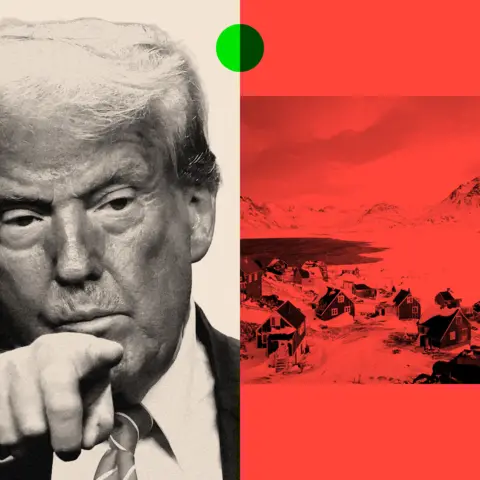
Consider the actions of the last few days: the White House's divisive intervention in the South American nation and the American leader's insistence following this, that "our national security requires Greenland from the viewpoint of national security".
Greenland is the world's biggest island – it's 600% the dimensions of Germany. It lies in the Arctic region but is an semi-independent territory of the Kingdom of Denmark.
At the Paris meeting, Mette Frederiksen, the Danish Prime Minister, was positioned facing two influential personalities acting for Trump: special envoy Steve Witkoff and Trump's relative Jared Kushner.
She was under pressure from her EU allies to refrain from alienating the US over the Arctic question, in case that affects US support for the Ukrainian cause.
EU heads of state would have greatly desired to compartmentalize Greenland and the debate on Ukraine distinct. But with the tensions mounting from the White House and Copenhagen, representatives of leading states at the gathering released a declaration saying: "This territory is part of the alliance. Security in the Arctic must therefore be achieved together, in conjunction with NATO allies like the US".
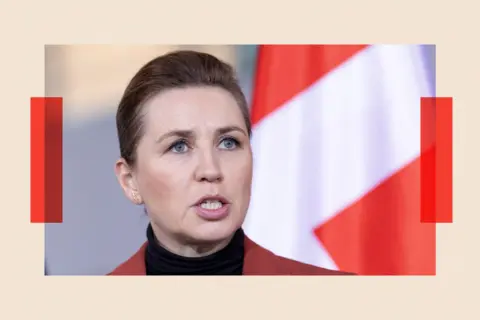
"It is for Denmark and the Greenlandic authorities, and no one else, to determine on affairs concerning Denmark and Greenland," the declaration continued.
The statement was greeted by Greenland's prime minister, Jens Frederik Nielsen, but observers argue it was slow to be put together and, owing to the small number of endorsers to the statement, it did not manage to show a Europe in agreement in purpose.
"Were there a joint position from all 27 European Union countries, in addition to alliance partner the UK, in defense of Copenhagen's control, that would have delivered a resounding signal to America," stated a European defense specialist.
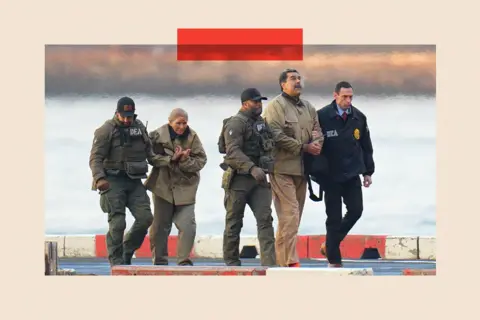
Reflect on the contradiction at play at the Paris summit. Numerous EU government and other leaders, including the alliance and the European Union, are attempting to secure the cooperation of the US administration in protecting the future sovereignty of a EU nation (Ukraine) against the expansionist land claims of an external actor (Moscow), just after the US has swooped into independent Venezuela by armed intervention, taking its president into custody, while also persistently openly threatening the sovereignty of a different EU member (the Kingdom of Denmark).
To compound the situation – Copenhagen and the US are both participants of the transatlantic alliance NATO. They are, as stated by Copenhagen, profoundly strong partners. Or were.
The issue is, if Trump were to make good on his desire to bring Greenland under US control, would it constitute not just an existential threat to the alliance but also a profound challenge for the European Union?
Europe Faces the Danger of Being Marginalized
This is far from the first instance Trump has expressed his determination to control the Arctic island. He's proposed acquiring it in the past. He's also left open the possibility of forcible annexation.
Recently that the territory is "crucially located right now, it is frequented by Russian and Chinese ships all over the place. Our security demands Greenland from the perspective of national security and Copenhagen is incapable to do it".
Denmark contests that last statement. It not long ago committed to invest $4bn in the island's defense encompassing boats, drones and aircraft.
As per a mutual pact, the US maintains a strategic outpost already on Greenland – set up at the beginning of the Cold War. It has scaled down the number of personnel there from around 10,000 during the height of that era to around 200 and the US has long been accused of overlooking polar defense, up to this point.
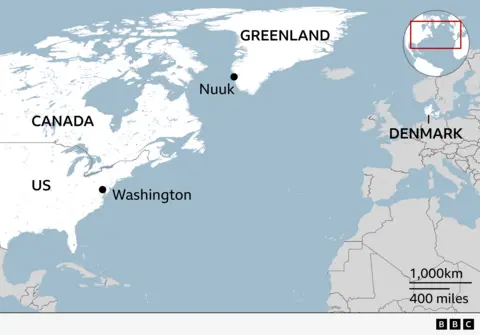
Denmark has indicated it is willing to talk about a expanded US footprint on the territory and further cooperation but in light of the US President's assertion of going it alone, Frederiksen said on Monday that the US leader's goal to control Greenland should be treated with gravity.
In the wake of the US administration's actions in Venezuela this past few days, her fellow leaders across Europe are heeding that warning.
"These developments has just underlined – yet again – Europe's fundamental shortcoming {
