


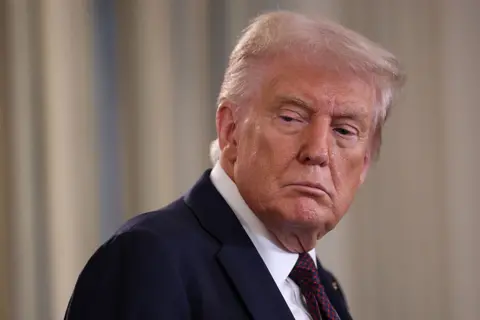
Our nation's judicial body begins its current term on Monday featuring an agenda already loaded with likely major cases that might define the extent of Donald Trump's executive power – and the chance of more cases approaching.
Over the past several months following the President was reelected to the executive branch, he has tested the limits of executive power, solely introducing recent measures, slashing federal budgets and staff, and seeking to bring once autonomous bodies further subject to his oversight.
Legal Disputes Over Military Mobilization
An ongoing emerging judicial dispute originates in the administration's attempts to assume command of local military forces and send them in cities where he claims there is social turmoil and rampant crime – against the objection of municipal leaders.
Across Oregon, a US judge has handed down directives blocking the President's deployment of troops to the city. An higher court is preparing to examine the move in the coming days.
"This is a land of judicial rules, rather than army control," Judge the court official, that the administration appointed to the judiciary in his previous administration, declared in her recent statement.
"The administration have presented a series of arguments that, should they prevail, threaten blurring the distinction between non-military and military government authority – to the detriment of this nation."
Emergency Review Might Shape Military Control
When the appellate court makes its decision, the High Court might step in via its so-called "shadow docket", delivering a decision that may limit executive power to use the military on domestic grounds – conversely grant him a broad authority, in the short term.
These proceedings have grown into a regular phenomenon lately, as a majority of the judicial panel, in reaction to emergency petitions from the executive branch, has mostly permitted the administration's measures to proceed while legal challenges progress.
"A tug of war between the High Court and the trial courts is set to be a driving force in the coming term," Samuel Bray, a professor at the Chicago law school, said at a meeting recently.
Objections Over Expedited Process
Justices' use on this shadow docket has been criticised by progressive legal scholars and politicians as an improper use of the legal oversight. Its decisions have usually been short, providing restricted explanations and leaving lower-level judges with scarce direction.
"Every citizen should be worried by the Supreme Court's growing reliance on its emergency docket to settle controversial and notable cases absent the usual openness – without detailed reasoning, public hearings, or rationale," Politician Cory Booker of New Jersey commented previously.
"This further pushes the Court's considerations and rulings away from public oversight and insulates it from accountability."
Comprehensive Hearings Approaching
In the coming months, nevertheless, the judiciary is scheduled to tackle issues of executive authority – and additional prominent conflicts – head on, hearing courtroom discussions and delivering comprehensive decisions on their substance.
"It's unable to have the option to brief rulings that don't explain the justification," noted an academic, a expert at the Harvard Kennedy School who specialises in the High Court and political affairs. "If they're intending to award greater authority to the executive the court is will need to explain the reason."
Major Cases within the Docket
Justices is currently planned to examine whether national statutes that forbid the president from firing personnel of agencies created by the legislature to be self-governing from White House oversight infringe on executive authority.
The justices will additionally hear arguments in an accelerated proceeding of the President's effort to fire Lisa Cook from her position as a member on the prominent central bank – a matter that could substantially enhance the administration's power over US financial matters.
America's – and international economic system – is additionally front and centre as Supreme Court justices will have a occasion to rule if many of Trump's solely introduced duties on foreign imports have adequate regulatory backing or should be overturned.
Judicial panel might additionally review the administration's attempts to unilaterally slash public funds and terminate junior government employees, along with his aggressive immigration and expulsion measures.
Although the court has yet to decided to review Trump's effort to end automatic citizenship for those born on {US soil|American territory|domestic grounds
